

The Tuscia territory is very rich in historical and artistic beauties even underground. Until now, only the subterranean areas of Orte and Viterbo were known, but new tunnels, the Connutti, have recently been discovered in Vignanello. Let us explore these underground secrets!
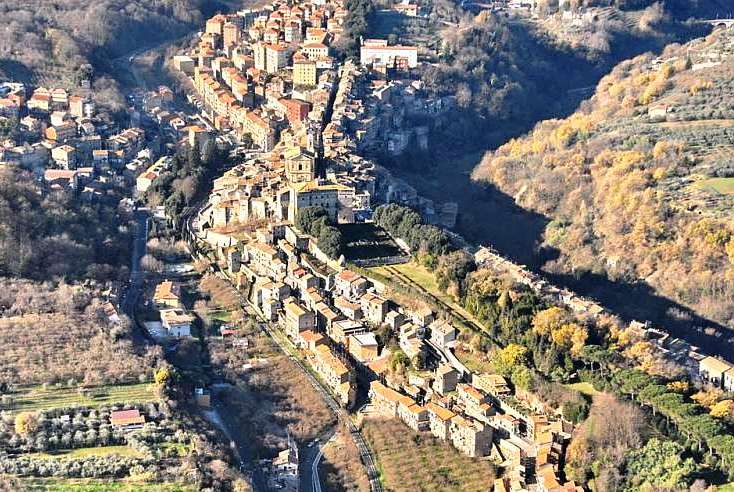
Vignanello, view of the village
The origins of Vignanello seem to date back to prehistoric times. As evidenced by the Necropolis of Valle della Cupa, it was an important Etruscan settlement, developed into a real village from the ninth century BC. onwards.
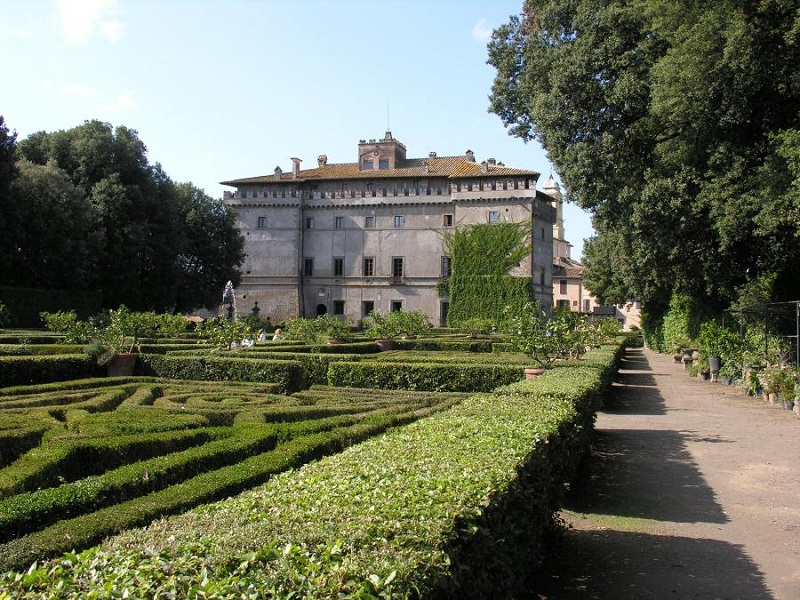
Vignanello, Castello Ruspoli
Fascinated by small streets and charming squares, we reach the Castello Ruspoli from 1531. It was reconstructed between 1531 and 1538 on a design by Antonio da Sangallo il Giovane. The medieval fortress was then turned into the majestic grey stone castle we can still admire today. Inside, we can visit the magnificent gardens of Ottavia Orsini, which make the the manor one of the most beautiful monuments in Lazio.
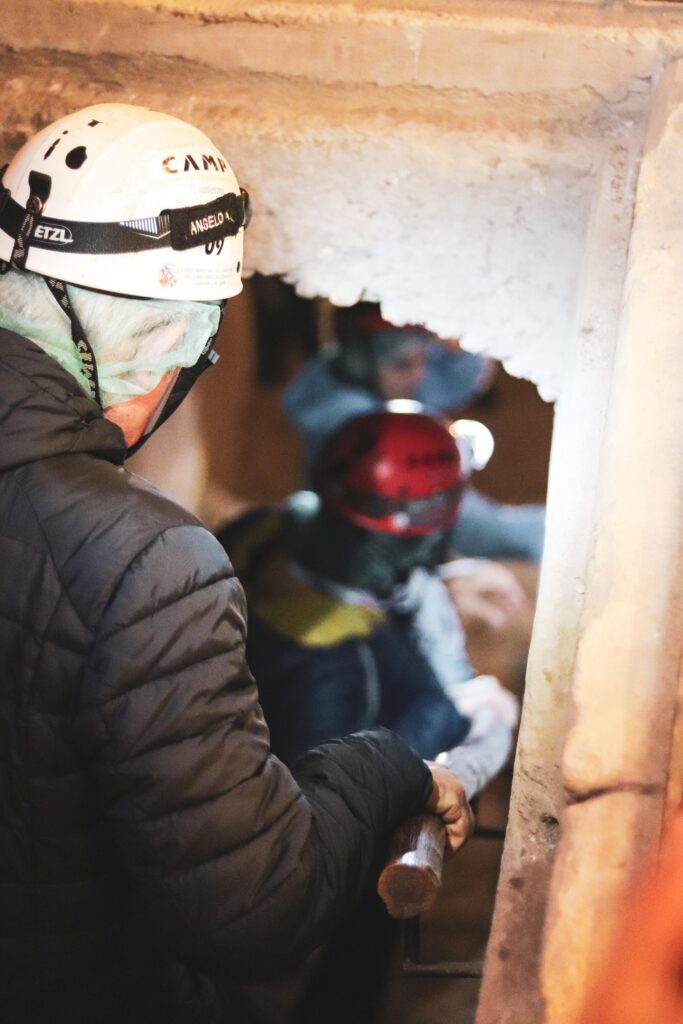
A visit to the Connutti in Vignanello – photo Facebook @prolocovignanello
To fully understand the history of the village, we must consider that the subsoil in Vignanello encloses spaces and paths, whose origins and functions are still to be explained. More or less true stories have been reported by those who ventured through the outlets in the village centre, under the Castello Ruspoli or in nearby areas.
We are now going to explore the Connutti, which develop along a main line from Valle della Cupa towards Castello Ruspoli, approximately in the west-east direction, and then also reach other precincts.
We know for sure that the Etruscans used these tunnels to collect water from underground sources for everyday use. Given the existence of a Faliscan settlement where Vignanello stands nowadays, the Falisci might have created these underground paths. In the Middle Ages they were partially expanded and used for new purposes, probably for defence. Even today, they preserve their original function of transporting water, and supplying the fountains of the Italian garden of the Castello Ruspoli.
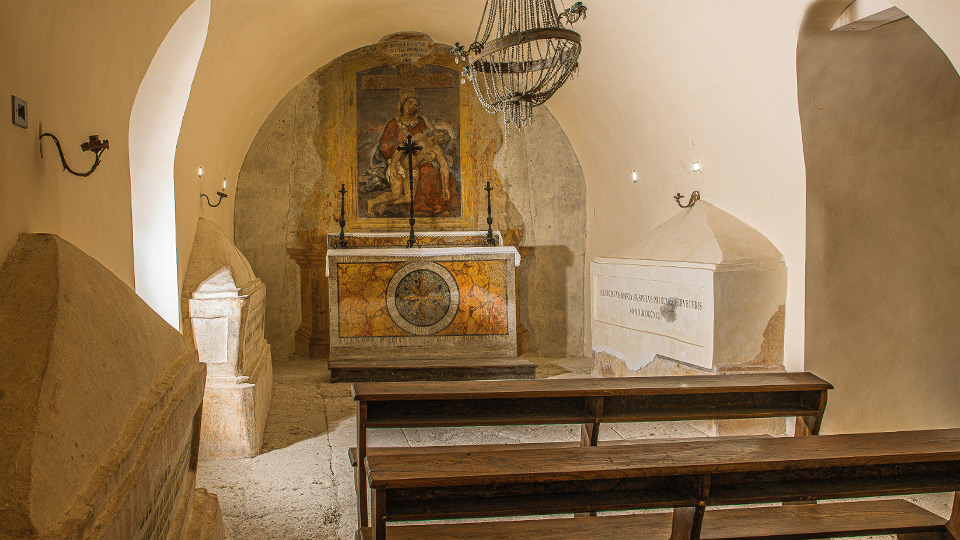
Cappella della Madonna SS.ma dei Sette Dolori in the Collegiata di S. Maria della Presentazione – foto www.iconnutti.com
A guided tour of the hypogea leads us to the discovery of the Cappella della Madonna dei Sette Dolori. Then, through a trapdoor, we enter a tunnel which runs below the centre of the village, and come upon the remains of a terracotta aqueduct, built in the early 1600s by Ottavia Orsini. Along the itinerary, we run into explanatory panels and glass cases with findings from the Chapel and the tunnels under the historic centre of Vignanello.
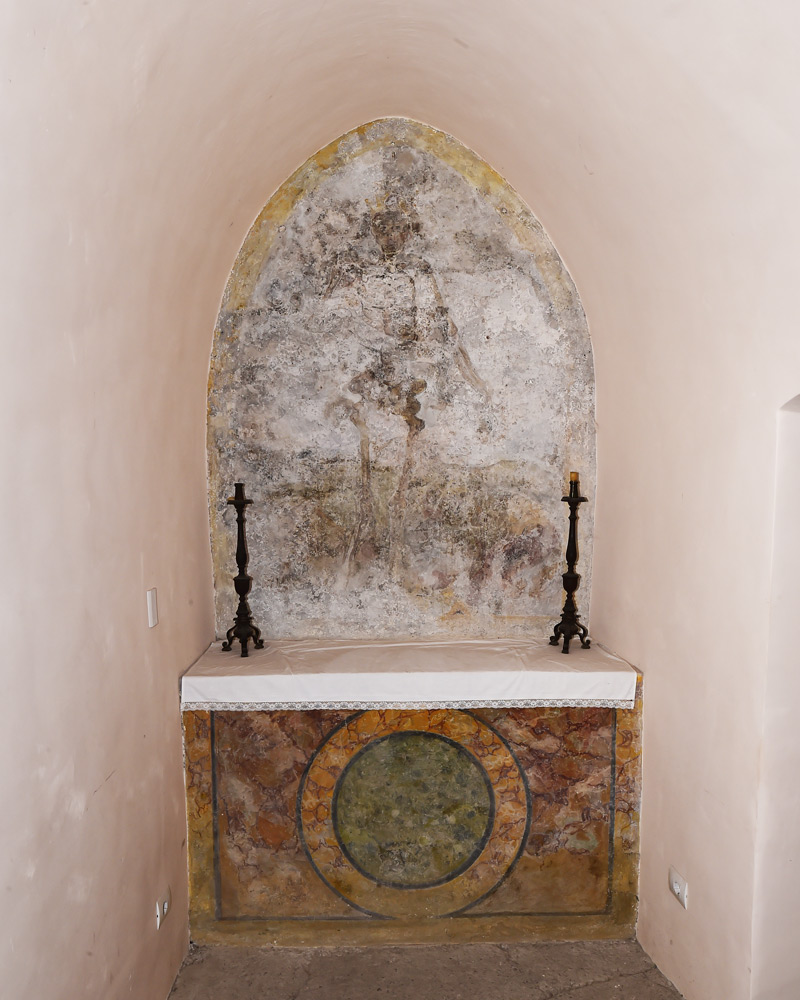
Ossuary in the Cappella della Madonna SS.ma dei Sette Dolori in the Collegiata di S. Maria della Presentazione – foto www.iconnutti.com
The basement of the Chiesa Collegiata di Santa Maria della Presentazione hosts a sepulchral chapel dedicated to the Madonna SS.ma dei Sette Dolori. The shrine, dating back to the 1720s, preserves the tombs of the Ruspoli princes and common ossuaries. A Pietà is painted above the main altar and skulls with crossed bones decorate the entrance door, while, on the back wall, hangs the painting “Il Trionfo della Morte” by Luc’Angelo Camilli.